
ULALABS Distributed Learning pilot second workshop at the University of Twente (Enschede): Re-designing the Campus for Diversity

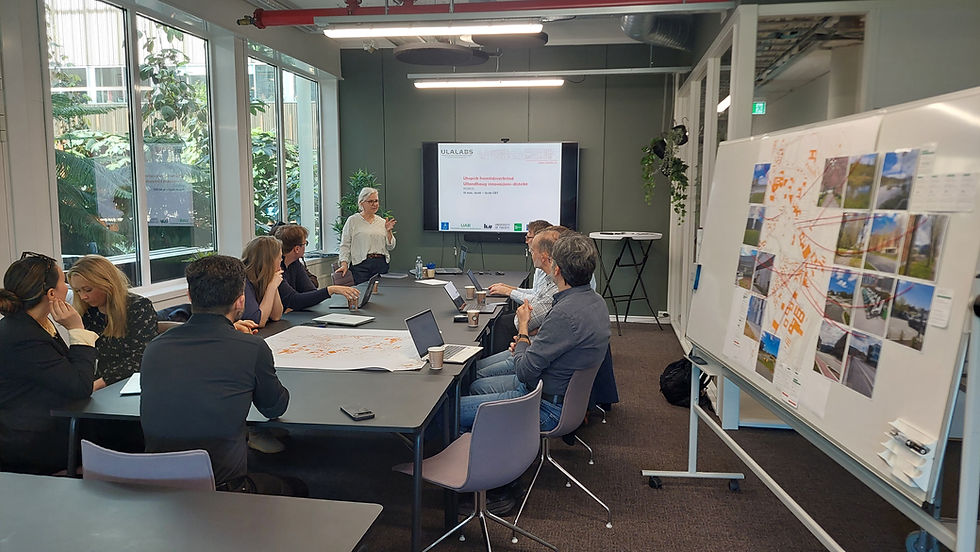
What would you change in the open spaces across a university campus to make them more welcoming for everyone? This is the central question that guided the workshop “Re-designing the Campus for Diversity,” that took place on June 10, 2026, at the University of Twente as part of the Voices in Motion festival.
University campuses are often seen as open and inclusive environments, yet many spaces unintentionally cater to specific groups, leaving others feeling excluded or less inclined to visit, use and stay in these spaces. This interactive workshop invited participants to critically reflect on how campus spaces are used, by whom, and—equally important—who might be missing. By bringing together diverse perspectives, the session uncovered both visible and hidden barriers that shape how people experience public spaces on the University of Twente campus. Students from different master and bachelor programmes joined the workshop, and were encouraged to think beyond their own perspectives: Who feels comfortable on campus? Who does not? What design elements, social cues, or spatial arrangements influence these experiences?
AI to stimulate discussion and critical thinking
A distinctive feature of this workshop was its hands-on integration of an AI-assisted urban design tool. Developed within the Erasmus+ ULALABS project, this tool supports experimentation with collaborative design solutions. Participants used it to imagine and create proposals for redesigning specific areas of the University of Twente campus.
The goal was not only to generate creative ideas but also to explore how emerging technologies can support more inclusive and participatory design processes.
The workshop unfolded in four key steps:
-an introduction to frame the challenge,
-an interactive session with the AI-based design tool,
-a collaborative “imagine and create” phase,
-and a plenary discussion of results.
Each proposal was examined through a critical lens: Who benefits from the design?
Who might still be excluded? And what challenges could arise during implementation?
One of the insights that the students gained from comparing the resulting AI suggested design improvements is that even though for each design, the AI suggestion was impressive, when the students compared the different outputs they could also see that they all looked very similar. There was no added creativity derived from the use of AI. The results were less impressive than initial thought by the students and less reflexive of the student's ideas and creative input.
ULALABS and collaborative learning environments
By encouraging this reflective approach, the workshop aligns closely with the broader ambitions of the ULALABS project. ULALABS focuses on developing urban living labs as collaborative environments where stakeholders—from academia, industry, and local communities—can co-create solutions to complex challenges.
Through its Distributed Learning Pilot, the project supports experimentation across several European regions, including Enschede, and asks a key question: how can technology and collective design practices foster more inclusive and sustainable urban spaces? At the University of Twente, this question has also been explored in previous workshops with societal partners, and in the context of courses that adopt challenge-based learning approaches.
Ultimately, Re-designing the Campus for Diversity was more than a design exercise. It was an invitation to rethink the role of the campus as a shared public space—one that belongs not only to students and staff but also to the city, its visitors, and its diverse communities. By identifying concrete gaps and opportunities, participants contributed to a broader vision of a more inclusive, welcoming, and vibrant campus environment.


Comentaris