
Second pilot Workshop at Ullandhaug Campus in Stavanger: From Utopian Ideas to Action
On May 27, 2026, the second local workshop, part of the ULALABS Distributed Learning DL1, took place at HelseCampus in the Ullandhaug Innovation Park, bringing together participants from academia and local institutions to explore how the ideas from the Workshop 1 could be realised in practice.
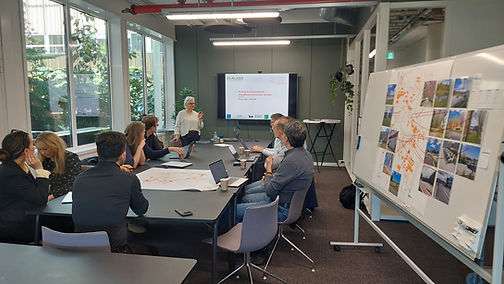
Following the Utopian Future Workshop method, this session moved from critique and imagination toward implementation. Participants were invited to revisit the utopian visions developed earlier and begin identifying feasible actions, responsibilities, and collaborations.
From Vision to Reality
The workshop began with a recap of the first session. While the intention was to develop concrete plans for selected ideas, discussions quickly highlighted that many proposed initiatives—such as open activities and shared spaces—already exist to some extent at the University of Stavanger and through SiS, the Student Welfare Organization. This shifted the focus toward a key challenge: how to better connect, communicate, and amplify what is already happening.
Three broad themes structured the conversation:
Nature and spatial quality
Organisation and communication
Ullandhaug as an attractive and integrated part of the city
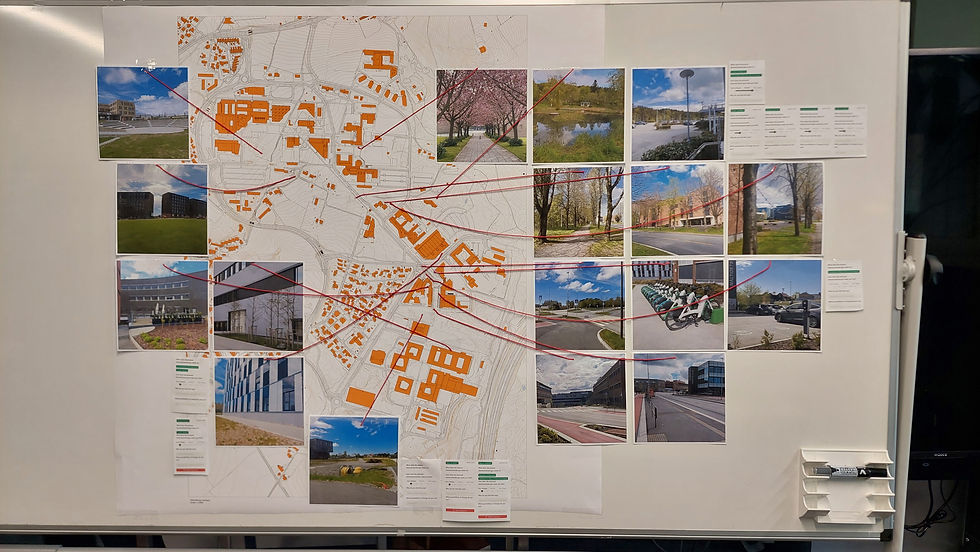
A Campus That Closes Too Early
One recurring observation was that the campus tends to become largely empty after 16:00, with only a few exceptions. The new Sports Centre—now the largest in Stavanger and open to the public through memberships—was highlighted as a positive example of evening activity and broader accessibility.
At the same time, participants noted that Ullandhaug is changing rapidly, particularly with the growth of student housing. This raises new needs and opportunities: bringing everyday services onto campus, such as grocery stores, hairdressers, bike workshops, and similar amenities, could support a more vibrant and self-sustaining district.
The new University Hospital also introduces the potential for a more 24-hour campus environment, with services and activities extending beyond traditional academic hours. However, regulatory constraints were identified as a barrier, as Ullandhaug is currently designated as an institutional area, limiting the range of functions that can be developed.
Coordination Over Creation
A central insight from the workshop was that Ullandhaug’s main challenge is not a lack of activity, but rather fragmentation across institutions. Many valuable initiatives already exist—such as research events, festivals, and public programmes—but they are not sufficiently visible or coordinated.
Several concrete proposals emerged:
A shared communication platform to provide a clear overview of events and activities across Ullandhaug
Closer collaboration between communication and outreach teams in different organisations
The creation of cross-institutional working groups to develop specific initiatives and events
These ideas reflect a shift in thinking: strengthening connections may be more impactful than introducing entirely new concepts.
Looking Ahead
The workshop served as an important platform to visualise Ullandhaug’s key challenges and opportunities and to bring together stakeholders with the capacity to influence future decisions across institutions. It highlighted not only the campus's complexity but also the shared willingness to address its fragmentation and unlock its potential. Although ULALABS is a temporary project, the process has demonstrated the value of creating a structured space for dialogue, reflection, and collaboration. This ideation platform could serve as a stepping stone toward a multi-institutional forum that regularly addresses campus development, aligns priorities, and fosters stronger collaboration among actors.
Such a group could play a crucial role in shaping a long-term strategic vision for Ullandhaug, supported by clearer responsibilities and more coordinated action plans. By moving from ad hoc discussions to sustained cooperation, the momentum generated through these workshops can evolve into meaningful, lasting change. Ultimately, Workshop 2 showed that Ullandhaug’s future will depend not only on good ideas, but on the ability to build shared ownership and continuity across institutions—ensuring that visions are translated into concrete actions over time.

Comentaris