
Reimagining the UAB campus north limit: ULALABS second workshop advances with the definition of the New Green Entrance
Actualitzat: May 5

On 23 April, the Universitat Autònoma de Barcelona hosted the second participatory workshop within the ULALABS project, continuing the co-creation process focused on the transformation of the Recycling Center and the CircuLAB surrounding area, within the framework of the UAB Healthy and Sustainable Week (Setmana Saludable i Sostenible) and its programme of activities.
Building on the initial diagnosis developed during the first workshop, this second session brought together students, researchers and technical staff to move from analysis towards more concrete spatial proposals. The workshop was framed within the UAB campus Living Lab, reinforcing the role of the campus as a real-scale experimentation environment for addressing urban challenges through collaborative approaches, with the support of Replantegem - particularly Mariona Ferrandiz and Uri Serra - in facilitating the co-creation process.
An initial interactive exercise allowed participants to validate the previous diagnosis, confirming a shared perception of the area as fragmented, car-dominated and lacking pedestrian accessibility, environmental quality and social activity. At the same time, participants highlighted its strong potential to become a key connector within the campus and a new “Green Entrance”.


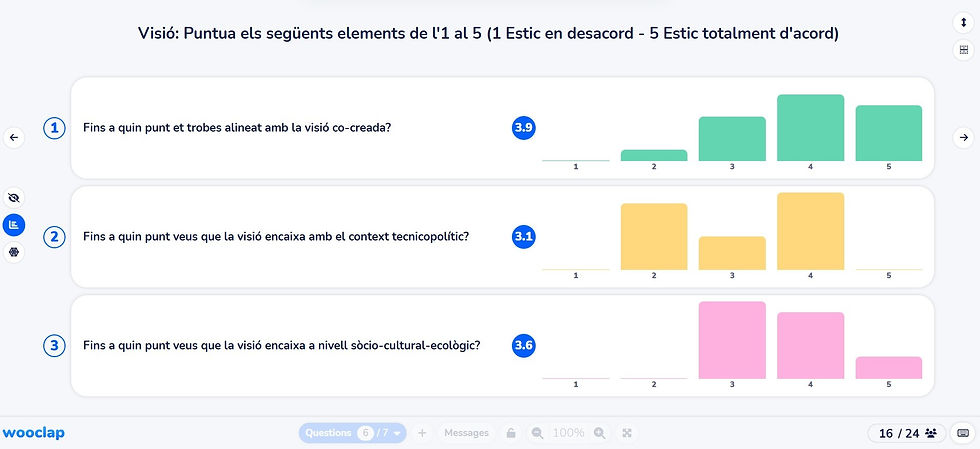
Co-CREATION OUTCOMES
The core of the session focused on group work, where participants developed proposals for the transformation of the campus space by exploring new potential uses and activities, as a ways to activate the area and generate activity. The workshop also incorporated the use of an AI-assisted urban design tool, which supported participants in rapidly visualising and refining their ideas.
A key focus of the workshop was the identification of potential new activities that could emerge or be placed within the study-area. Various proposals emerged from groups:

A landscaped pedestrian plaza, transforming the current parking area into a more accessible and people-centred space, with new pathways, vegetation and shaded areas to improve environmental quality and everyday use.
A social and gathering area, including potential spaces such as a bar or informal meeting points to encourage interaction and daily activity.
A multifunctional amphitheatre space, replacing car-dominated surfaces with tiered seating, shaded structures and open pedestrian access, designed to host social and community activities.
Outdoor teaching and learning areas, supporting educational activities in open-air environments.
Outdoor sport and recreational areas, promoting physical activity and informal use of the space.
Indoor learning spaces, such as study areas or a small library to support academic use.
Experimental farm plots and composting areas, linked to sustainability, circular economy and environmental awareness.
Cycling infrastructure, including bike parking, stations and basic repair facilities.
Group A
Group B
Group C
Across all proposals, a common objective was identified: shifting from a fragmented, infrastructure-dominated space towards a greener, more connected and people-centred environment. Key strategies include reducing the dominance of cars, improving pedestrian and cycling accessibility, increasing biodiversity, and fostering social uses.
This second workshop represents a key step in the ongoing co-creation process, advancing from diagnosis to more defined spatial proposals that will inform the next stages of the ULALABS pilot.
You can consult the workshop presentations here:


Comentaris